
MANDOG REVIEW
Old-school D&D in Rhode Island, circa 2018

Overview
I’ll start by wholeheartedly recommending Mandog. It was my favourite module that I ran in 2025, and I ran quite a few games that year.
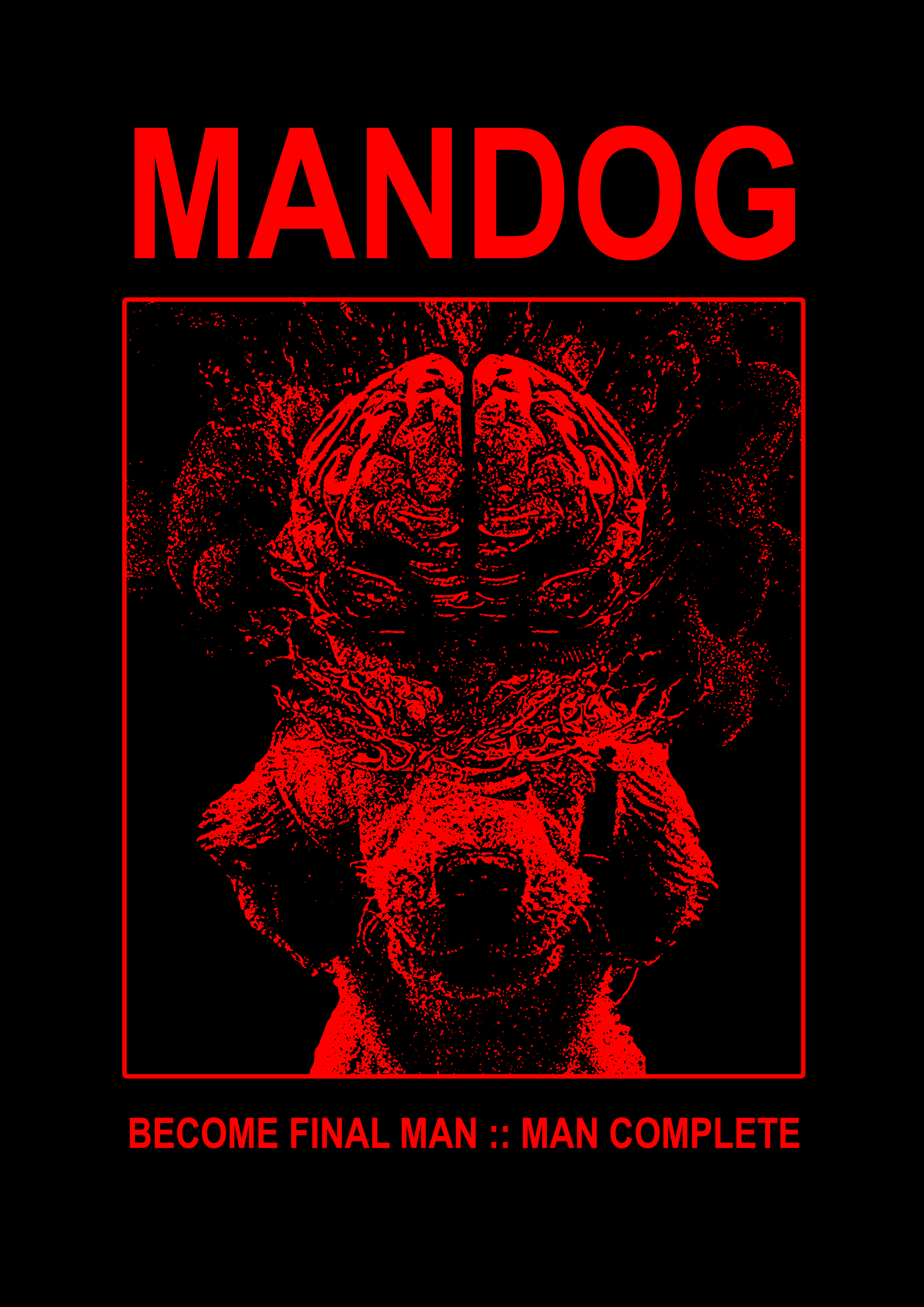
Mandog is an adventure module for old-school D&D written by Gromb, with editing by Sam Sorensen, layout by Stella Condrey and illustrations by Wilber H Force.
By old-school D&D, I’m referring to earlier versions of it, such as Original D&D from 1974 and the Basic/Expert sets. Retro-clones such as Delving Deeper or OSE work too.
However, unlike most adventures for old-school D&D, it is set in a contemporary setting: Rhode Island in 2018. Magic exists, but is a well-kept secret.
On October 21st of 2018, the Witches of Bullock’s Nest left a dog in a wire cell in the basement. He chewed his way out and read all their books. When they came home, he opened them up and took their hearts and brains. He does not want to become a man. He wants to become the final man, man complete.
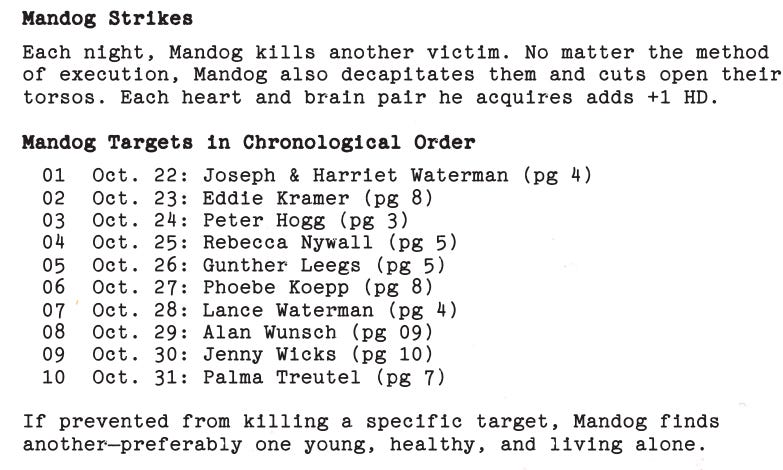
For 10 nights thereafter, Mandog kills a victim. He also decapitates them and cuts open their torso. Every heart and brain he acquires makes him stronger and stronger.
Unfortunately for the neighbourhood, a National Guard blockade had been set up for the past year, keeping them all in as the murders occur. The reason for this is kept vague, but the module makes allusions to a “Black Moon” and implies that there are victims that have been suffering syndromes, turning them into coyotes.
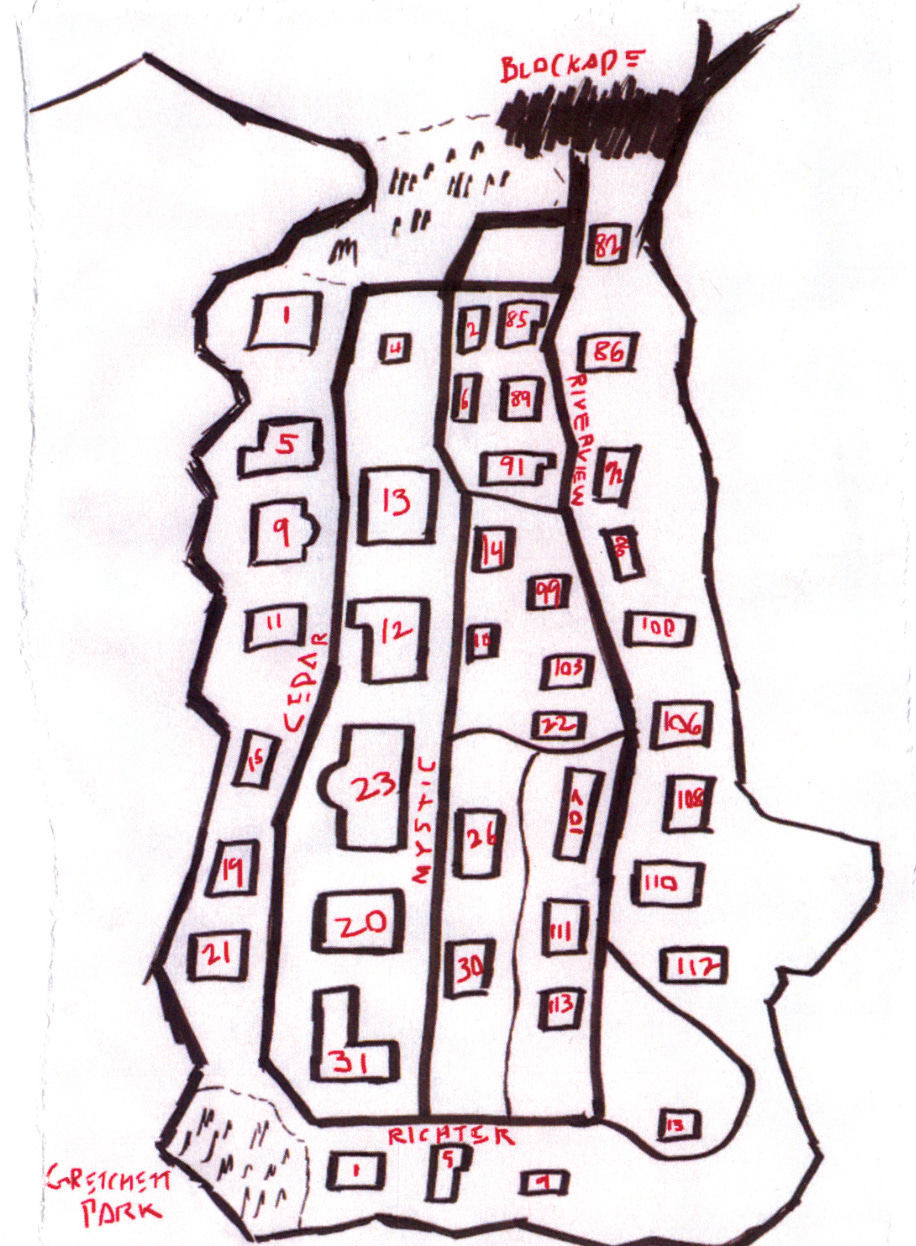
With this relatively simple premise comes with it an entire sandbox. The neighbourhood of Providence is well detailed, and, along with the daily events and encounters, feels like a living, breathing place. Mandog does this all in 16 pages.
I have run Mandog, played in a session of Mandog, and have also read a session report of Mandog. It has enough content for many hours of play, and in all the sessions that I know about, only a fraction of the content was revealed. In my game, about 5% of the neighbourhood was interacted with.
There are approximately 100 NPCs. Every block in the neighbourhood of Providence is described succinctly, and for every character within those blocks, their name and age is given, along with their alignment.
Extrapolation
Extrapolation is how Mandog is able to achieve its level of depth and breadth.
Let me give an example.

From this we can glean that there are 3 children who have somehow been able to communicate with a giant, 235-year-old tree in their backyard. The Protection from Evil prevents contact from enchanted or conjured creatures. In addition, it protects against chaotic creatures and increases saving throw chances. This implies, at least to me, that there is someone, or something, occult that has plans to potentially harm the children or the Tree.
It’s left up to interpretation what might potentially harm these children, but let’s look at some of the neighbouring houses.
To the south, we find this:
That could be what threatens the 3 kids, but let’s look further.
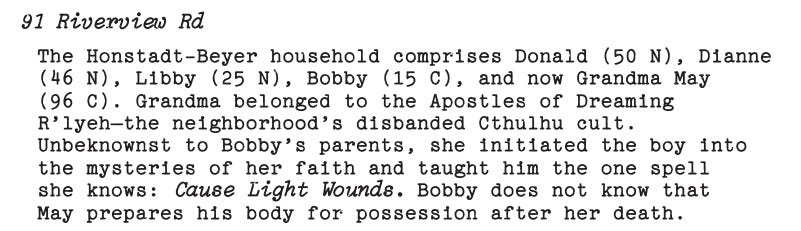
To the north, we find this:
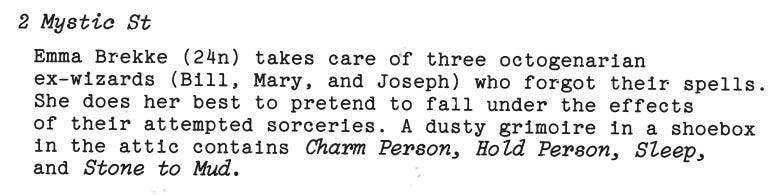
Note that Mandog didn’t name the surnames of Bill, Mary and Joseph, and does not say whether they are part of Emma’s family. I believe these sort of gaps are done on purpose and are important. What you take away from this contextually depends on you.
You might decide that Grandmother May is a relative to Bill, Mary and Joseph and that they were all part of the same cult. You may also decide that Grandmother May is actually a rival cultist who aims to steal the grimoire. And in the middle of all of that, there are 3 children with the aid of a giant magical tree. There are so many situations that this could inspire, all within 3 paragraphs of text.
As I said earlier, extrapolation is how Mandog achieves its depth and breadth. It provides just enough gaps that you can fill it in with whatever you think makes the most sense. The gaps matter.
Here’s another example.

In old-school D&D, a level 1 fighter is considered a veteran. A level 3 fighter is one level away from becoming a hero, and would have at that point bested many, many foes. Yul Herman is 11 years old.
Reading this, I immediately thought of Dagestan fighters in competitive mixed martial arts. Dagestan is a republic of Russia that has an insane wrestling training regiment. I remembered a video I saw of the Dagestan fighter Khabib wrestling a bear as a child.
To me, Yul Herman is just that - an 11 year old martial arts master who just so happens to also be a mercenary taking on dangerous jobs for fish.
How you might interpret Yul Herman will likely be different, but the adventure gives just enough flavour and a strong scaffolding, making it easy for the reader to be able to extrapolate.
It also makes it faster to read and prep.
Prep
Speaking of prep, let’s discuss how I did that. I wanted to run something for a one-on-one session. The prep was light and easy - I read the whole module in 20 minutes. Then, to decide how to situate the players, rolled a d10 for a victim who would get killed by Mandog, and made the player run several related characters. Then I ran it for about 5 hours.
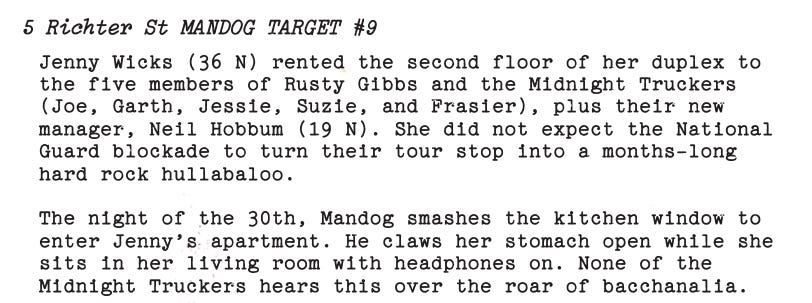
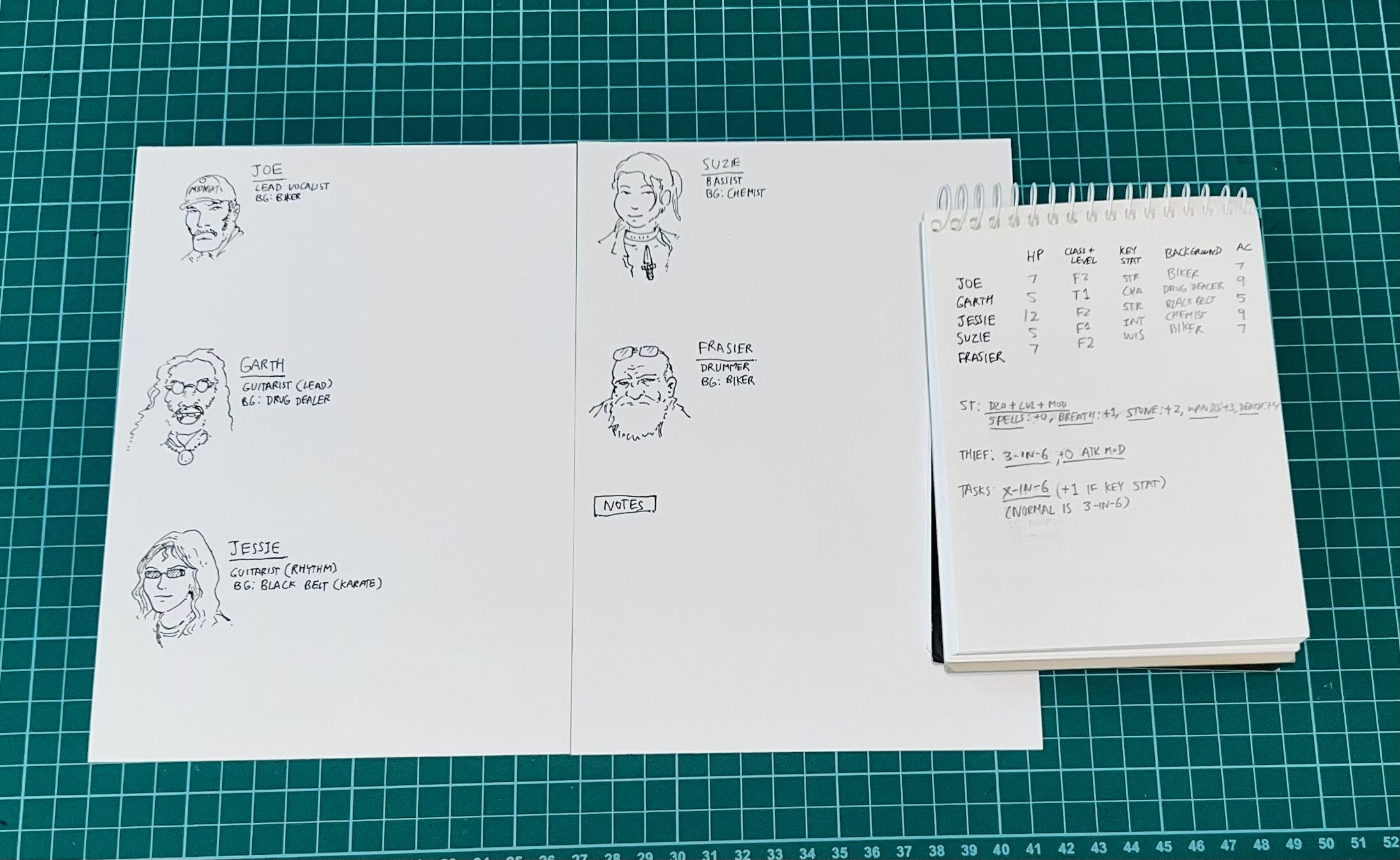
It was wonderful. My player exposed a serial killer, accidentally committed arson (because of two ghosts who killed each other simultaneously), broke into Mandog’s lair with Yul Herman and eventually got taken out along with half of the roof in a blazing fireball.
Mandog lacks hooks. I think this is a good thing. Reading the book becomes a process of extrapolation and more importantly, discovery. Coming up with reasons for adventure, especially in such a dense neighbourhood, is not hard.
Speaking to people who have run the adventure, I found the process to be similar across the board. Prep is easy and light, especially compared to other adventures that ask so much time and energy and give so little.
When I ran it, I didn’t explain that I was using Original Dungeons and Dragons. I didn’t even let the player know what module I was running. Not everyone is as fortunate to be able to do that, but I think that the element of surprise can be advantageous, given another strength of Mandog: casting old-school D&D spells in a new light.
Context
Let’s go back to the hidden grimoire previously owned by the 3 ex-wizards. To recap, it had Charm Person, Hold Person, Sleep and Stone to Mud.
I’ve already described how Stone to Mud can level a building (it happened in a friend’s Mandog game), but just for an example, think about Charm Person. In old-school D&D, it can last forever. In Basic/Expert they allow for saves to snap out of it at specific intervals, but otherwise, the spell continues indefinitely.
Now think about if someone had access to that in the modern day.
Taking something that a lot of players are familiar with and placing it into a different context can cast light on just how absolutely horrific some of these spells can be.
Cons
Mandog is not perfect.
It has no OCR in the PDF, much less hyperlinking.
Finding text can take a little time, especially when names are mentioned but not their street address.
The map is a bit hard to read and has duplicate numbers with different street names, meaning that it can be easy to confuse blocks.
It’s still the best module I ran in 2025.
It’s brilliant, inspiring, funny, horrific and genuinely unique. It has a voice of its own that I rarely see in TTRPGs. Mandog is outstanding and you should run it today.
This sounds so crazy and wild! 😊
This is some real indie guerrilla dnd shit. Love it